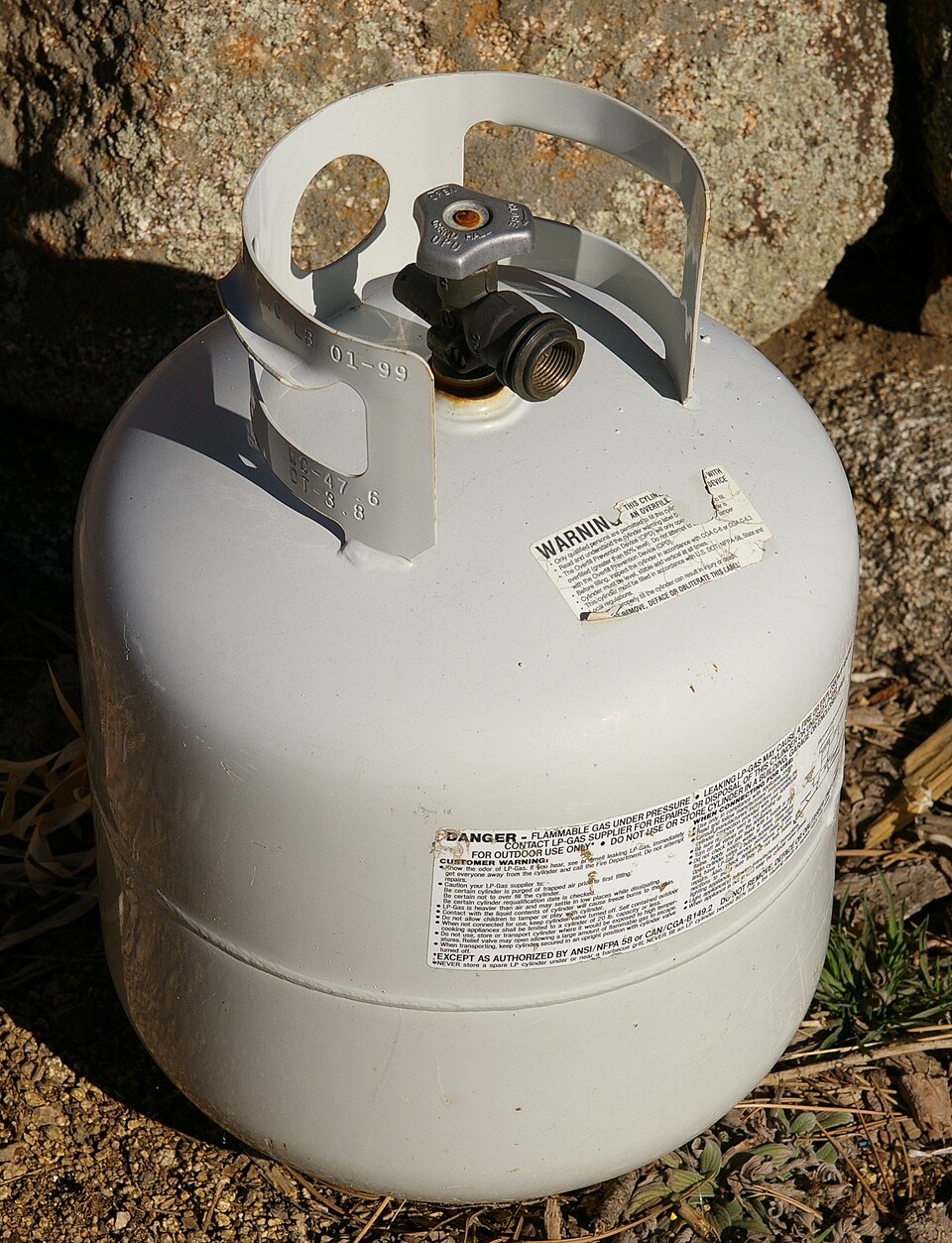
Propane Cylinder Design: Debunking Exploding Gas Bottle Myths
The image of an "exploding gas bottle" is one that can send shivers down anyone's spine, often conjuring dramatic, uncontrolled scenes of fire and devastation. Recent events, such as the industrial fire in Geelong's northern region, where onlookers reported multiple explosions involving gas bottles amidst a scrap pile of tires and wrecked vehicles, can certainly fuel these fears. However, while such incidents are undeniably serious and require immediate emergency response due to toxic smoke and potential hazards, they often lead to misconceptions about the inherent safety and design of propane cylinders themselves. It's crucial to understand that propane cylinders, whether small barbecue tanks or larger industrial vessels, are engineered with remarkable robustness and do not readily explode on their own.
This article aims to delve into the sophisticated design of propane cylinders, demystify the conditions under which they can fail, and debunk common myths surrounding the terrifying notion of exploding gas bottles. By understanding the engineering principles and safety features, we can better appreciate the reliability of these essential energy sources and learn how to handle them safely.
The Fortified Design of Propane Cylinders: Built to Endure
One of the most significant takeaways from industry standards and real-world incidents is that propane cylinders are exceptionally well-built. They are not fragile containers susceptible to rupture from a mere bump or fall. In fact, like their larger ASME propane tank counterparts, LP gas cylinders are specifically designed to withstand extensive external damage.
- Robust Materials: Propane cylinders are typically constructed from high-strength steel or aluminum, chosen for their durability, resistance to impact, and ability to handle internal pressure.
- Rigorous Manufacturing Standards: Adherence to strict industry standards, such as those set by the National Fire Protection Association (NFPA), ensures that every cylinder meets stringent quality and safety requirements. This includes robust welding, precise shaping, and pressure testing.
- Impact Resistance: The structural integrity of these containers is a primary design consideration. Instances where cylinders have been subjected to forceful impacts—even being struck by vehicles, as documented in one case where a cylinder falling onto a highway survived better than the vehicle that hit it—demonstrate their incredible resilience. While a cylinder might be deemed unfit for continued service after such an event, the containment of liquid propane often remains secured. This inherent strength significantly reduces the likelihood of rupture from typical accidental damage.
In essence, the design philosophy behind propane cylinders prioritizes containment and structural integrity, making the possibility of an explosion due to simple physical impact exponentially remote.
When Do Propane Cylinders Fail? The Critical Role of Extreme Heat
If forceful blows and accidental drops rarely lead to catastrophic failure, what conditions *can* cause propane cylinders to become dangerous, even to the point of "exploding"? The answer, consistently and unequivocally, is extreme heat.
Propane cylinders will not explode when used and stored in accordance with NFPA requirements. The critical factor that compromises a cylinder's integrity and can lead to a violent rupture or rapid release of fuel is exposure to a sustained, intense external heat source, most commonly a fire. Here's why:
- Pressure Buildup: Propane exists as a liquid under pressure inside the cylinder. When exposed to heat, the liquid propane heats up and expands, increasing the vapor pressure inside the tank.
- Pressure Relief Valves (PRVs): All modern propane cylinders are equipped with a crucial safety device: a Pressure Relief Valve (PRV). This valve is designed to vent excess pressure automatically when it reaches a predetermined threshold, preventing the tank from rupturing due to overpressure. You might hear a hissing sound as gas is released during a fire, which is the PRV doing its job. This controlled venting is a safety feature, not a sign of imminent explosion.
- Metal Weakening: However, under prolonged and intense exposure to extreme fire conditions, the metal of the cylinder itself can weaken significantly. If the external heat source is so intense that it heats the liquid propane faster than the PRV can vent the vapor, or if the metal of the cylinder weakens to the point where it can no longer contain the internal pressure even at standard operating pressures, then a rupture can occur. This catastrophic failure, where the liquid propane rapidly boils and expands, is known as a BLEVE (Boiling Liquid Expanding Vapor Explosion), and it's what people often refer to as an "exploding gas bottle."
Online videos often depict cylinders "exploding," and almost without exception, these scenarios involve cylinders placed directly on a fire or subjected to extreme heat. Sometimes, these cylinders are even shot at while already on fire, further compromising their already weakened integrity. Understanding this mechanism is vital for appreciating why extreme heat triggers propane cylinder blasts and why proper storage and handling are paramount.
Debunking Common Myths About Exploding Gas Bottles
The term "exploding gas bottle" often carries a sensationalized and inaccurate connotation. Let's tackle some common myths:
- Myth 1: Propane Cylinders Explode Easily or Spontaneously.
Reality: False. As discussed, cylinders are incredibly robust and have multiple safety features. They do not spontaneously explode. A significant external event, overwhelmingly extreme heat from a fire, is required for a catastrophic failure.
- Myth 2: A Small Fire Will Cause a Propane Cylinder to Explode Instantly.
Reality: Not necessarily. A small, localized fire might activate the PRV, causing a controlled release of propane vapor, which could then ignite and burn off. While still dangerous and requiring immediate action, this is a safety mechanism at work, preventing a rapid rupture. The risk escalates with sustained, intense exposure that compromises the cylinder's structural integrity or overwhelms the PRV's venting capacity.
- Myth 3: Dropping a Propane Cylinder Will Make It Explode.
Reality: Highly unlikely. While dropping a cylinder can cause dents, damage the valve, or create leaks, the robust design makes an explosive rupture from impact alone exceptionally rare. Always inspect a dropped cylinder for damage and leaks before use, but don't assume immediate explosion.
- Myth 4: Propane Leaks Always Lead to Explosions.
Reality: A propane leak is dangerous because propane is highly flammable and heavier than air, meaning it can accumulate in low-lying areas and find an ignition source. However, a leak itself is not an explosion. An explosion occurs if a significant amount of propane vapor mixes with air in an enclosed space and then ignites. This is why proper ventilation and immediate action upon detecting a leak (shutting off the supply, ventilating the area, eliminating ignition sources) are critical.
Ensuring Propane Safety: Practical Tips for Use and Storage
Understanding the engineering behind propane cylinders empowers us to handle them responsibly. Adhering to safety guidelines drastically minimizes risks:
- Proper Storage:
- Always store propane cylinders upright and in a well-ventilated area, away from direct sunlight, heat sources, and potential ignition sources (e.g., pilot lights, electrical equipment, open flames).
- Never store propane cylinders indoors, in basements, or in enclosed spaces like garages or sheds unless specifically designed for it (e.g., small camping cylinders in specific enclosures).
- Keep cylinders away from highly combustible materials.
- Secure Transport:
- Transport cylinders securely in an upright position in an open-air vehicle (like the back of a pickup truck) or with windows open in a car.
- Never leave cylinders unattended in a hot vehicle.
- Leak Detection:
- Regularly check for leaks using a soapy water solution on connections and valves. Bubbles indicate a leak.
- If you smell propane (it has an added rotten-egg odor), immediately extinguish all flames, do not operate electrical switches, ventilate the area, and move the cylinder outdoors if safe to do so.
- Handle with Care:
- Always handle cylinders carefully; avoid dropping or striking them.
- Ensure connections are tight and in good condition before use.
- Inspection and Maintenance:
- Periodically inspect cylinders for rust, dents, or other damage. Damaged cylinders should be inspected by a qualified professional or safely disposed of and replaced.
- Be aware of the requalification date stamped on the cylinder (typically 5 or 10 years). Out-of-date cylinders cannot be refilled.
- Emergency Preparedness:
- Know how to shut off the propane supply at the cylinder valve.
- Have a fire extinguisher readily available when using propane appliances.
- In case of a fire involving a propane cylinder, evacuate immediately and call emergency services. Do not attempt to extinguish it yourself unless you are trained and it's a very small, manageable fire.
Conclusion
While the visual of exploding gas bottles in emergency situations like the Geelong industrial fire is alarming, it's crucial to understand the scientific and engineering realities behind propane cylinder safety. These containers are incredibly resilient, designed to withstand significant impact and equipped with safety features like Pressure Relief Valves to prevent catastrophic failure under most adverse conditions. The primary catalyst for a true cylinder rupture or BLEVE is prolonged and intense exposure to extreme heat, typically from an engulfing fire, which compromises the metal's integrity and overwhelms the PRV. By debunking common myths and adhering to simple, yet vital, safety protocols for storage, handling, and use, we can continue to utilize propane safely and efficiently in our homes and industries. For ongoing updates on emergency situations and safety information, always refer to official emergency services and trusted sources like Filmogaz.com.