Geelong Industrial Blaze: A Community Under Threat from Exploding Gas Bottles
A terrifying industrial fire recently ripped through Geelong's northern region, casting a pall of thick, toxic smoke over the city and triggering urgent emergency warnings. At the heart of this dangerous incident were exploding gas bottles, transforming a scrap yard into a volatile inferno and forcing immediate evacuations across multiple streets. The dramatic scenes underscored the inherent dangers of industrial fires, particularly when highly pressurized gas cylinders are involved, and highlighted the critical importance of swift emergency response and public awareness.
The incident, which began with reports around 3:30 PM, quickly escalated, prompting VicEmergency to issue a dire advisory: individuals within the affected zone were urged to evacuate immediately, while those outside were cautioned to maintain a significant safe distance. The sight of towering plumes of black smoke, visible for kilometers, served as a stark reminder of the potential for widespread disruption and health risks posed by such an event. This article delves into the specifics of the Geelong fire, explores the science behind why exploding gas bottles pose such a threat, and offers crucial insights into safety and emergency preparedness.
The Chaos Unfolds: Anatomy of an Industrial Inferno
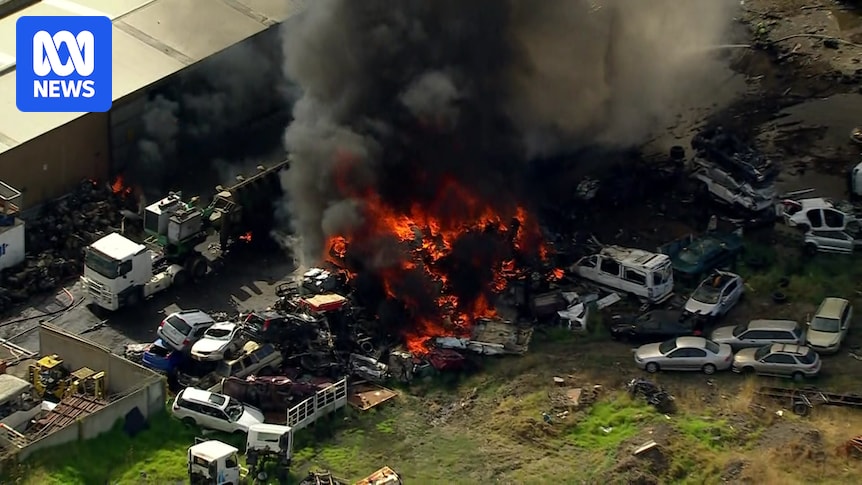
The epicenter of the blaze was pinpointed at a business located at the intersection of Thompson Road and Armstrong Street, a largely industrial section of Geelong. Eyewitness accounts painted a harrowing picture, with multiple explosions – confirmed to be from gas bottles – punctuating the roar of the fire. Aerial footage provided a chilling perspective, revealing a vast scrap pile of tires and wrecked vehicles engulfed in flames, fueling the blaze and contributing to the immense volume of smoke.
As of 4:30 PM, just an hour after the first emergency calls, the warning area had expanded significantly, encompassing Pashley Avenue, Sharon Court, and parts of Thompson Road and Armstrong Street. Firefighting crews from Fire Rescue Victoria rapidly established a perimeter, battling the intense flames and working tirelessly to control the inferno. Police and paramedics were also on scene, assisting with evacuations, managing traffic, and providing medical aid where necessary. The coordinated effort of emergency services was crucial in containing the situation and ensuring public safety.
The impact of the fire wasn't confined to the immediate vicinity. VicEmergency confirmed that the acrid smoke had drifted into residential areas such as North Geelong, Bell Park, and Bell Post Hill. Residents in these suburbs were advised to stay indoors, close windows and doors, and turn off air conditioning units to minimize exposure. The health implications of inhaling such toxic smoke are significant, particularly for vulnerable populations including children, the elderly, and individuals with pre-existing heart and lung conditions. Symptoms reported included irritated eyes, persistent coughing, and wheezing, underscoring the broader community health challenge posed by industrial incidents.
Demystifying "Exploding Gas Bottles": Understanding the Science Behind the Scare
The term "exploding gas bottles" often evokes images of catastrophic, instantaneous blasts. However, understanding the engineering and physics behind these incidents reveals a more nuanced reality. Contrary to common misconceptions, propane (LP Gas) cylinders and ASME propane tanks are not inherently prone to spontaneous explosion. They are designed with robust safety features and manufactured to stringent standards, such as those set by NFPA (National Fire Protection Association), to withstand significant external damage and internal pressure fluctuations.
The critical factor that transforms a gas bottle into a potential explosive device is extreme heat, typically from an engulfing fire. As the second reference context highlights, LP Gas cylinders do not explode easily or on their own. Their integrity is compromised when exposed to prolonged and intense heat, which weakens the container's steel structure and causes the liquid propane inside to rapidly expand. This expansion dramatically increases internal pressure, eventually overwhelming the cylinder's design limits and leading to a rupture or "explosion." This is a thermal event, not a chemical one, where the container fails due to heat-induced pressure.
It's important to differentiate between a bottle being damaged by impact and failing under extreme heat. Propane cylinders are engineered to be incredibly resilient. As the reference illustrates with the example of a cylinder struck by a vehicle, they can withstand forceful blows without rupturing. The structural strength is considerable, designed to safely contain the pressurized gas even when visibly damaged. Most online videos depicting "propane explosions" invariably show cylinders placed directly into or surrounded by a fire, demonstrating that Gas Bottle Safety: Why Extreme Heat Triggers Propane Cylinder Blasts is primarily about managing thermal risks. For a deeper dive into the engineering marvels that prevent everyday explosions, read our article on Propane Cylinder Design: Debunking Exploding Gas Bottle Myths.
Prioritizing Safety: Lessons from the Geelong Fire and Gas Bottle Management
The Geelong industrial fire serves as a potent reminder of the paramount importance of safety protocols in environments where hazardous materials, like gas bottles, are stored and used. For both industrial operations and domestic users, adherence to best practices is non-negotiable:
- Proper Storage: Gas bottles should always be stored upright, in a well-ventilated area, away from direct sunlight, heat sources, and flammable materials. They should also be secured to prevent falling or being knocked over.
- Regular Inspections: Cylinders should be routinely checked for visible damage, rust, leaks, or faulty valves. Any damaged bottle should be taken out of service immediately and handled by qualified professionals.
- Safe Handling: Always transport and move gas bottles carefully, using appropriate equipment like trolleys if necessary. Never roll, drop, or drag cylinders.
- Emergency Preparedness: Businesses handling large quantities of gas bottles must have robust fire safety plans, including readily accessible fire extinguishers, clear evacuation routes, and staff trained in emergency procedures.
- Awareness of Surroundings: In industrial settings, maintaining clear zones around gas bottle storage areas, free from combustible materials like scrap tires or vehicles, is crucial to prevent the spread of fire that could lead to exploding gas bottles.
In the event of a fire involving gas bottles, the primary advice is always to evacuate immediately and contact emergency services. Never attempt to extinguish a fire involving gas cylinders unless specifically trained and equipped to do so, as the risk of an explosion is extremely high. Maintaining a safe distance and allowing professionals to manage the situation is the safest course of action.
Community Resilience and Moving Forward
The Geelong industrial fire was a test of the community's resilience and the efficacy of its emergency response systems. While the immediate threat of exploding gas bottles was addressed by the tireless efforts of emergency services, the long-term impact of toxic smoke on the environment and public health requires ongoing monitoring. Authorities continue to oversee the situation, ensuring air quality returns to safe levels and providing information to affected residents.
This incident also sparks a broader conversation about industrial safety standards, urban planning, and the proximity of hazardous industrial sites to residential areas. Continuous vigilance, adherence to safety regulations, and public education are vital in mitigating risks associated with such events. For ongoing updates during emergencies, individuals are always advised to check official sources like VicEmergency and reputable news outlets.
The Geelong industrial fire, ignited by exploding gas bottles, serves as a stark reminder of the destructive power of uncontrolled blazes and the critical importance of robust safety measures and rapid emergency response. While the incident posed significant challenges and risks, the coordinated efforts of emergency services helped prevent an even greater catastrophe. Moving forward, continuous education on gas bottle safety and stringent adherence to industrial regulations will be key to protecting communities from similar threats.